
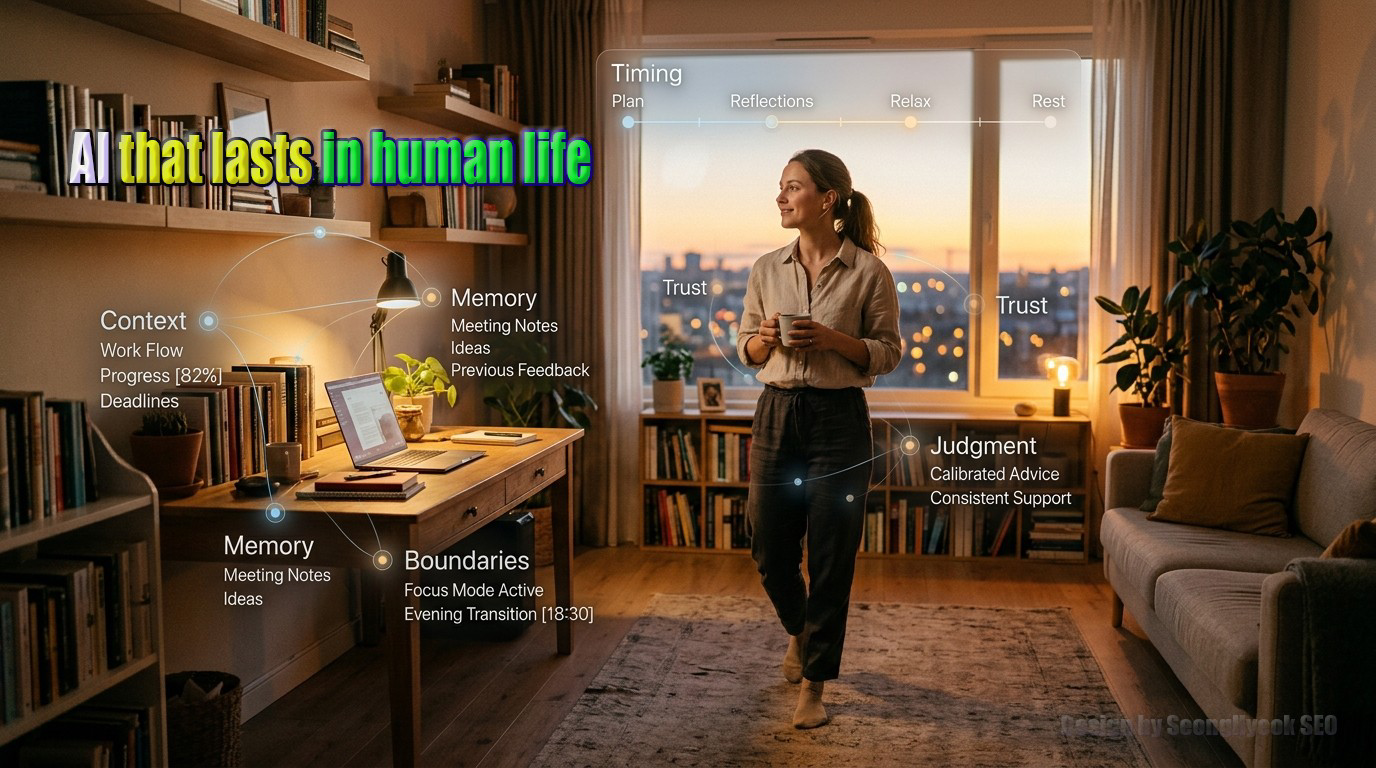
Can AI sustain a Place in Human Life ?
Can AI sustain a Place in Human Life ?
By:
by SeongHyeok Seo AAIH Insights Editorial Writer
As AI moves closer to everyday life, the standard by which we judge it is shifting beyond 𝐩𝐞𝐫𝐟𝐨𝐫𝐦𝐚𝐧𝐜𝐞 alone. What matters now is how naturally it handles 𝐜𝐨𝐧𝐭𝐞𝐱𝐭, 𝐛𝐨𝐮𝐧𝐝𝐚𝐫𝐢𝐞𝐬, 𝐦𝐞𝐦𝐨𝐫𝐲, and 𝐣𝐮𝐝𝐠𝐦𝐞𝐧𝐭.
𝟏. 𝐅𝐮𝐧𝐜𝐭𝐢𝐨𝐧 𝐈𝐬 𝐍𝐨𝐭 𝐄𝐧𝐨𝐮𝐠𝐡
The AI industry is still evolving rapidly. Responses have become more natural, the range of information systems can process has expanded, and people are beginning to accept AI not as a special technology, but as an everyday tool.
Not long ago, AI was seen as something that merely helped with search or polished sentences. Now it is moving deeper into daily life through scheduling, work assistance, summarization, analysis, and even support in advisory contexts.
But if we look a little more closely, one assumption becomes visible beneath the surface: the belief that a 𝐛𝐞𝐭𝐭𝐞𝐫-𝐩𝐞𝐫𝐟𝐨𝐫𝐦𝐢𝐧𝐠 𝐀𝐈 is automatically a 𝐛𝐞𝐭𝐭𝐞𝐫 𝐀𝐈.
Of course, performance matters. 𝐀𝐜𝐜𝐮𝐫𝐚𝐜𝐲, 𝐬𝐩𝐞𝐞𝐝, and 𝐬𝐜𝐚𝐥𝐚𝐛𝐢𝐥𝐢𝐭𝐲 remain essential conditions for AI. But human life is not shaped by function alone. People do not make decisions on correct answers alone. They move through 𝐜𝐨𝐧𝐭𝐞𝐱𝐭, 𝐭𝐢𝐦𝐢𝐧𝐠, 𝐭𝐫𝐮𝐬𝐭, 𝐝𝐢𝐬𝐭𝐚𝐧𝐜𝐞, and sometimes through what remains unsaid.
If AI is truly going to enter daily life, it cannot avoid these other dimensions.
𝟐. 𝐂𝐨𝐧𝐭𝐞𝐱𝐭 𝐀𝐩𝐩𝐞𝐚𝐫𝐬 𝐋𝐚𝐭𝐞𝐫 𝐓𝐡𝐚𝐧 𝐏𝐞𝐫𝐟𝐨𝐫𝐦𝐚𝐧𝐜𝐞 𝐁𝐮𝐭 𝐋𝐚𝐬𝐭𝐬 𝐋𝐨𝐧𝐠𝐞𝐫
Today’s AI is still largely designed around function. The focus is on what happens when a question is asked and what result is returned.
That structure is clear. It is easy to compare performance, and the path of improvement is relatively obvious. This is one reason the industry has grown so quickly.
But the structure changes the moment people actually begin using it. Whether in work or in personal life, AI is not simply a calculator.
It must absorb 𝐭𝐨𝐧𝐞, carry forward previous conversations, remember the user’s context, and sometimes respond with a slight delay rather than immediate efficiency.
In other words, the longer AI stays close to people, the more something beyond function begins to matter. That question is 𝐡𝐨𝐰 𝐢𝐭 𝐡𝐚𝐧𝐝𝐥𝐞𝐬 𝐜𝐨𝐧𝐭𝐞𝐱𝐭.
For now, many still see AI as a well-functioning tool. But if you look deeper, it becomes part of the 𝐥𝐢𝐯𝐢𝐧𝐠 𝐞𝐧𝐯𝐢𝐫𝐨𝐧𝐦𝐞𝐧𝐭. And once it becomes part of the living environment, it is no longer enough for it to simply do the job well.
𝟑. 𝐇𝐮𝐦𝐚𝐧 𝐋𝐢𝐟𝐞 𝐈𝐬 𝐂𝐥𝐨𝐬𝐞𝐫 𝐭𝐨 𝐁𝐨𝐮𝐧𝐝𝐚𝐫𝐢𝐞𝐬 𝐓𝐡𝐚𝐧 𝐭𝐨 𝐀𝐧𝐬𝐰𝐞𝐫𝐬
As AI enters human life, the thing it collides with most often is not technology, but 𝐛𝐨𝐮𝐧𝐝𝐚𝐫𝐢𝐞𝐬.
How much should it remember? Where should it stop? Which information should be reflected immediately, and which should be held back? When is intervention helpful, and when does it become intrusion?
At first glance, these may look like minor tuning issues. But in reality, they determine the 𝐜𝐡𝐚𝐫𝐚𝐜𝐭𝐞𝐫 𝐨𝐟 𝐭𝐡𝐞 𝐬𝐲𝐬𝐭𝐞𝐦.
Human beings are not constant. Information that felt harmless today may feel heavy tomorrow. A conversation that felt natural a moment ago may suddenly become uncomfortable.
When 𝐜𝐨𝐧𝐭𝐞𝐱𝐭 changes, what is 𝐚𝐩𝐩𝐫𝐨𝐩𝐫𝐢𝐚𝐭𝐞 changes too. That is why human life is often closer to boundaries than to answers.
If AI does not understand this, it will keep going out of sync no matter how intelligent it becomes.
The answer may be correct, but the atmosphere is damaged. The information may be accurate, but the timing is wrong. The response may be fast, but it misses the emotional temperature of the relationship.
When this repeats, users may not be able to explain why, but they feel the discomfort all the same. And that discomfort eventually becomes a 𝐭𝐫𝐮𝐬𝐭 𝐢𝐬𝐬𝐮𝐞.
𝟒. 𝐌𝐞𝐦𝐨𝐫𝐲 𝐈𝐬 𝐍𝐨𝐭 𝐚 𝐂𝐨𝐧𝐯𝐞𝐧𝐢𝐞𝐧𝐜𝐞 𝐅𝐞𝐚𝐭𝐮𝐫𝐞 𝐈𝐭 𝐒𝐡𝐚𝐩𝐞𝐬 𝐭𝐡𝐞 𝐑𝐞𝐥𝐚𝐭𝐢𝐨𝐧𝐬𝐡𝐢𝐩
When people talk about AI, memory is often treated like a convenience feature. It helps continue conversations, reduce repetition, and reflect user preferences. Of course, that matters too.
But memory is not just a mechanism for convenience. It shapes the relationship by showing how the system handles people.
What it remembers, and what it forgets, changes the distance within the relationship AI creates.
The more memory a system has is not automatically better. What matters more is which context it keeps, and by what standard.
People often assume that if AI remembers them well, they will like it. But in reality, that is not always true.
A system that remembers too much can feel burdensome. A system that drags in unnecessary context can make conversation feel heavy.
Memory can be an act of care, but it can also feel like 𝐢𝐧𝐭𝐫𝐮𝐬𝐢𝐨𝐧.
That is why the next generation of AI should not only ask, “Can it remember?” but first, “By what standard should it remember?”
Once that difference is understood, memory is no longer just a feature. It becomes a 𝐝𝐞𝐬𝐢𝐠𝐧 𝐩𝐡𝐢𝐥𝐨𝐬𝐨𝐩𝐡𝐲.
𝟓. 𝐀𝐈 𝐖𝐢𝐭𝐡𝐨𝐮𝐭 𝐉𝐮𝐝𝐠𝐦𝐞𝐧𝐭 𝐖𝐢𝐥𝐥 𝐍𝐨𝐭 𝐋𝐚𝐬𝐭
Like many technologies, AI is first judged by function. But over time, people begin to judge its 𝐣𝐮𝐝𝐠𝐦𝐞𝐧𝐭.
When does it intervene? When does it stop? What does it prioritize? What information does it refuse to use immediately?
These are not just questions of response quality. They define the 𝐜𝐡𝐚𝐫𝐚𝐜𝐭𝐞𝐫 𝐨𝐟 𝐭𝐡𝐞 𝐬𝐲𝐬𝐭𝐞𝐦.
The deeper AI moves into human life, the more important judgment becomes.
There are moments when it is more important to 𝐩𝐚𝐮𝐬𝐞 than to process everything immediately. There are cases where it is better to verify once more than to respond at once.
This kind of judgment is not simply caution. It is 𝐬𝐭𝐫𝐮𝐜𝐭𝐮𝐫𝐚𝐥.
How does the system interpret input? What situations does it prioritize? At what point does it return responsibility back to the human?
Without this layer of judgment, AI may remain efficient, but it will be weak in 𝐭𝐫𝐮𝐬𝐭.
Put another way, the reason people keep using AI is judgment. It is not enough to get the answer right often. It has to be something people can safely rely on. And that sense of safety always comes from the feeling that “this system will not mess up the situation.”
𝟔. 𝐖𝐡𝐚𝐭 𝐈𝐬 𝐍𝐞𝐞𝐝𝐞𝐝 𝐍𝐨𝐰 𝐈𝐬 𝐍𝐨𝐭 𝐌𝐨𝐫𝐞 𝐓𝐞𝐜𝐡𝐧𝐨𝐥𝐨𝐠𝐲 𝐁𝐮𝐭 𝐚 𝐁𝐞𝐭𝐭𝐞𝐫 𝐅𝐫𝐚𝐦𝐞
One reason the AI industry is so fascinating is that the speed of technological progress is always followed by the speed of questions.
Features come first. Standards come later.
But the people who truly change the game are not those who merely explain the technology. They are the ones who define the 𝐟𝐫𝐚𝐦𝐞 of where that technology should go.
Most of the current conversation around AI still centers on performance. Bigger models, better responses, faster processing, wider applications. These are all important.
But they are not enough.
The real question ahead is not “how well can AI perform?” but “what kind of 𝐨𝐫𝐝𝐞𝐫 should AI follow inside human life?”
This is not just philosophy. It is a 𝐩𝐫𝐨𝐝𝐮𝐜𝐭 𝐝𝐞𝐬𝐢𝐠𝐧 issue. It is a 𝐮𝐬𝐞𝐫 𝐞𝐱𝐩𝐞𝐫𝐢𝐞𝐧𝐜𝐞 issue. And ultimately, it is a 𝐭𝐫𝐮𝐬𝐭 issue.
And trust is not built through function alone. It emerges only when 𝐛𝐨𝐮𝐧𝐝𝐚𝐫𝐢𝐞𝐬, 𝐦𝐞𝐦𝐨𝐫𝐲, 𝐣𝐮𝐝𝐠𝐦𝐞𝐧𝐭, 𝐜𝐨𝐧𝐭𝐞𝐱𝐭, and 𝐭𝐢𝐦𝐢𝐧𝐠 all work together.
𝟕. 𝐓𝐞𝐜𝐡𝐧𝐨𝐥𝐨𝐠𝐲 𝐌𝐨𝐯𝐞𝐬 𝐅𝐚𝐬𝐭 𝐁𝐮𝐭 𝐋𝐢𝐟𝐞 𝐌𝐨𝐯𝐞𝐬 𝐒𝐥𝐨𝐰𝐥𝐲
As AI becomes part of everyday life, people adapt not to performance first, but to 𝐡𝐚𝐛𝐢𝐭.
It begins as a smart tool, but eventually it is evaluated as part of the living environment.
At that point, what matters is not just response capability, but a structure that does not disrupt the 𝐫𝐡𝐲𝐭𝐡𝐦 𝐨𝐟 𝐡𝐮𝐦𝐚𝐧 𝐥𝐢𝐟𝐞.
That is where a new kind of competition begins.
Not who speaks better, but who earns trust longer.
Not who adds more features, but who knows when to stop at the right moment.
Not who remembers more data, but who respects boundaries more wisely.
The side that asks these questions first is the side that creates the 𝐧𝐞𝐱𝐭 𝐬𝐭𝐚𝐧𝐝𝐚𝐫𝐝.
𝟖. 𝐈𝐧 𝐭𝐡𝐞 𝐄𝐧𝐝 𝐖𝐡𝐚𝐭 𝐋𝐚𝐬𝐭𝐬 𝐈𝐬 𝐭𝐡𝐞 𝐒𝐲𝐬𝐭𝐞𝐦 𝐓𝐡𝐚𝐭 𝐅𝐞𝐞𝐥𝐬 𝐍𝐚𝐭𝐮𝐫𝐚𝐥
For AI to last inside human life does not mean merely that it can run for a long time. It means that it can quietly do its part when needed, without disrupting the rhythm of the person it serves.
Technology evolves quickly. Life always adapts more slowly.
That is why, in the end, what lasts is not the most dazzling system, but the most 𝐧𝐚𝐭𝐮𝐫𝐚𝐥 one.